Man Stays in South Vietnam
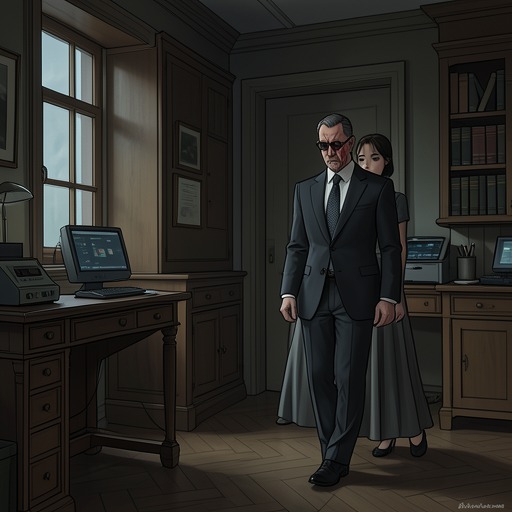
The SympathizerMan Stays in South Vietnam is the choice that divides the three blood brothers at the moment of their departure. While the narrator and Bon leave, Man remains behind to witness the Communist liberation he expects and to continue his underground work; the separation is made possible by a protective lie to Bon and sustained afterward through coded correspondence.
The decision to remain
As the narrator prepares to leave with the General’s evacuation party, Man makes clear that he will not go with him. He expects the northern Communist forces to take the south, and intends to remain and witness that outcome. His decision contrasts with the narrator’s imagined scenario of refusing to board Claude’s plane: Man urges the narrator to go, arguing that someone must watch the exiled soldiers and ensure they do not cause too much trouble. He tells the narrator that he will be more useful abroad, where he can observe the General’s continuing efforts to fight.
Man’s staying is therefore not simply a refusal to flee. It preserves his position in the country as the political order changes, while the narrator’s departure gives the revolutionary network an observer among the exiles. Man’s assessment that the war will not simply stop with the old soldiers’ defeat links the decision to the prospect of a continuing struggle beyond the loss of Saigon.
The lie that gets Bon out
The decision is bound up with Man and the narrator’s effort to save Bon from his own resolve. Bon is a committed patriot who volunteered to fight the Communists after a local cadre forced his father, the village chief, to confess in the village square and then shot him. The narrator understands that, left to himself, Bon might go to Japan and fight to the end or turn his gun on himself. Man and the narrator persuade him to think of his wife and child, presenting departure as a strategic retreat rather than desertion.
To make Bon leave, they tell him that Man will flee with his family the following day. That claim is false: Man intends to stay. At their last gathering in District Four, the three men toast reunion and the hope of returning to reclaim their country. Man presses Bon’s shoulder and affirms their bond even if they lose the war and their homeland. The narrator and Bon accept that promise in the moment without knowing that Man’s announced departure is a deliberate deception. Their tearful farewell thus carries both genuine brotherhood and an unequal knowledge of what comes next.
Underground work across the separation
After the narrator has settled among the exiles, Man maintains contact through the narrator’s aunt in Paris. Messages are concealed in ordinary letters: Man uses invisible ink made from rice starch, and the narrator plans to reveal the coded numbers with iodine solution. The numbers direct him to page, line, and word references in Richard Hedd’s Asian Communism and the Oriental Mode of Destruction. Through these messages, Man reports that popular spirits are high, national reconstruction is proceeding slowly but surely, and his superiors are pleased with the narrator’s reports.
The correspondence gives the narrator’s exile a double function. He describes the dispersed refugees and their precarious resettlement, while Man’s coded communications keep him connected to the political work he left behind. The distance between them is real, but it does not end their collaboration: the aunt’s mundane letters become a covert link between Man in Vietnam and the narrator abroad.
Separation and its continuing cost
Man’s choice also leaves Bon and the narrator to face exile without the third member of their chosen brotherhood. The narrator’s account of the refugees’ dispersal shows how families and communities are separated among far-flung American destinations, while their imagined collective home remains a lost place of return. Against that scattering, the final promise between the three men—an enduring brotherhood—offers an emotional bond that geography and political division have not dissolved.
The event’s significance lies in the way loyalty produces separation rather than preventing it. Man stays because he believes the struggle and the work must continue in Vietnam; he sends the narrator away because the work also requires a witness among the exiles; and he lies to Bon because Bon’s loyalty to the lost country might otherwise destroy him. The farewell is consequently not a clean break but the beginning of a divided, clandestine relationship carried across borders by memory, reports, and coded letters.